
About me
I investigate Human-AI Alignment: how AI systems can keep people’s decisions, knowledge and attention in the loop, so that they extend what people can understand, decide and discover.
Postdoctoral Fellow at the Munich Data Science Institute and the Georg Nemetschek Institute, Technical University of Munich, selected through the TUM GNI Postdoc Program.
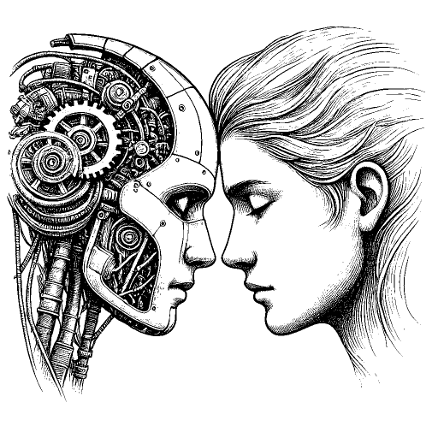
Four alignments
Applied in
- AI for engineering
- AI for the built environment
- AI for sustainability and materials science
- AI for medicine
- under review A heterogeneous dataset of European building energy models and simulation results for surrogate modeling Scientific Data B
- 2026 Context Repair for LLMs: Pilot v2 Research report, ThoughtDAG AC
- 2026 Front-Loading Cost Estimation in Early-Stage BIM Design Computing in Civil Engineering 2026 A
- 2026 Workflow-Oriented Convex Decomposition of 2D Building Geometry In Proceedings of the 33rd International Workshop on Inte... AB
- 2026 From 'What-is' to 'What-if' in Human-Factor Analysis: A Post-Occupancy Evaluation Case Building and Environment AB
- 2026 Evaluation of Building Design Variants in Early Phases on the Basis of Adaptive Detailing Strategies Buildings A
- 2025 Constraint Breeds Generalization: Temporal Dynamics as an Inductive Bias arXiv preprint D
- 2025 Dynamical Alignment: A Principle for Adaptive Neural Computation Neuromorphic Computing and Engineering D
- 2025 Integrating symbolic neural networks with building physics: A study and proposal Journal of Building Engineering B
- 2024 Explainable AI for engineering design: A unified approach of systems engineering and component-based deep learning Advanced Engineering Informatics BC
- 2024 Component-based machine learning modeling for predicting building energy performance – An overview In Proceedings of BauSim 2024, 10th Conference of IBPSA-G... B
- 2024 Utilizing domain knowledge: robust machine learning for building energy performance prediction with small, inconsistent datasets Knowledge-Based Systems B
- 2024 Machine learning in proton exchange membrane water electrolysis — A knowledge-integrated framework Applied Energy B
- 2024 Beyond predictions: alignment between prior knowledge and machine learning for human-centric augmented intelligence Doctoral dissertation, Leibniz University Hannover ABC
- 2024 A holistic two-stage decision-making methodology for passive and active building design strategies under uncertainty Building and Environment A
- 2023 Using causal inference to avoid fallouts in data-driven parametric analysis: A case study in the architecture, engineering, and construction industry Developments in the Built Environment ABC
- 2023 Toward reliable signals decoding for electroencephalogram: A benchmark study to EEGNeX Biomedical Signal Processing and Control BC
- 2023 Feasibility Analysis of POD and Deep-autoencoder for Indoor Environment CFD Prediction In Proceedings of the 18th International IBPSA Conference... B
- 2023 Performance investigation of different topology organizations in district heating systems with component-based machine learning In Proceedings of the 18th International IBPSA Conference... B
- 2023 Pathway toward prior knowledge-integrated machine learning in engineering In Proceedings of 18th International IBPSA conference and... B
- 2023 Sustainability recommendation system for process-oriented building design alternatives under multi-objective scenarios In Proceedings of 30th International Workshop on Intellig... A
- 2022 Introducing causal inference in the energy-efficient building design process Energy and Buildings AB
- 2022 Integrated data-driven and knowledge-based performance evaluation for machine assistance in building design decision support In Proceedings of 29th International Workshop on Intellig... AB
- 2022 A hybrid-model forecasting framework for reducing the building energy performance gap Advanced Engineering Informatics B
- 2022 A Dynamic Feedforward Control Strategy for Energy-efficient Building System Operation In Proceedings of Passive and Low Energy Architecture, PL... AB
- 2022 Machine assistance in energy-efficient building design: A predictive framework toward dynamic interaction with human decision-making under uncertainty Applied Energy A
- 2022 欧盟-德国建筑碳中和前沿; Frontiers of carbon neutrality in EU-German building sector 暖通空调; Heating Ventilating & Air Conditioning
- 2021 A hybrid-model forecasting framework for reducing the building energy performance gap In Proceedings of 28th International Workshop on Intellig... B
- 2021 Component-based machine learning for predicting representative time-series of energy performance in building design In Proceedings of 28th International Workshop on Intellig... B
Open-source tools

Thinking with AI on an infinite canvas.
Extended with researchers at the Max Planck Institute for Intelligent Systems in TraceVista.
Features and demos

Features and demos
I received my Dr.-Ing. summa cum laude from Leibniz University Hannover, after doctoral research at TU Berlin and Leibniz University Hannover with Prof. Dr.-Ing. Philipp Geyer and Prof. Dr. rer. nat. Marius Lindauer; the dissertation, Beyond Predictions (thesis · video), set out the first three alignments. In early 2024, I was a Visiting Scholar at the Center for the Built Environment (CBE), UC Berkeley, exploring causal inference and AI ethics in engineering reasoning. In 2026, I was an Invited Scholar at the Summer Institute on Bounded Rationality, Max Planck Institute for Human Development, Berlin.
I am also a photographer, capturing the balance between light, motion, and silence: gallery.
News
- Oct 2026Where an agent turn's tokens goAcross 3,237 turns of my own agent sessions, the answer a person reads was 1 to 7% of a turn's tokens.
- 2026Human–AI Alignment in AI for Science, Zhejiang University
- Aug 2026Context repair for LLMs: Pilot v2On nine model endpoints, removing or regenerating the turns that repeated an error repaired more answers than deleting its source alone.
- Jun 2026What Cannot Yet Be Ruled OutOn bounded rationality, irreducible uncertainty, and what AI alignment must preserve.
- 2026Compositional Knowledge Primitives: Methodological Constraints for Bounded Human-AI Inquiry, Summer Institute on Bounded Rationality, Max Planck Institute for Human Development
- 2026You Are Not the Bottleneck, You Are the Purpose, TUM Junge Akademie Symposium
- Feb 2026AI Systems Are Developing Swarm Autonomy. That's Enough to Be Dangerous.On emergent coordination in multi-agent systems and the case for proto-agency as a safety concern.
- 2024Pathway toward Prior Knowledge-Integrated Machine Learning in Engineering, DigitalFUTURES Workshop, Tongji University
- 2024Knowledge-integrated Machine Learning in Building Engineering, WELL Seminar, Center for the Built Environment, UC Berkeley
- 2021Causal Inference as a Method to Aid the Process of Sustainable Building Design, Microsoft Community Workshop on Causal Tools